








Introduction to Search Engine Basics in 2026
Understanding Search Engine Basics is essential for anyone who wants to grow online visibility in 2026. Whether you own a business, manage a website, or create digital content, search engines play a major role in how users discover information online. Modern search engines have evolved far beyond simple keyword matching and now use artificial intelligence, user behavior analysis, and advanced ranking systems to deliver the most relevant results.
Today, billions of searches happen daily across different platforms, making search engines one of the most powerful tools for online discovery. Businesses focusing on strong content quality, technical optimization, and user experience are more likely to achieve better search engine positioning and long-term organic growth.

What is a Search Engine and Why It Matters?
A Search Engine is an online software system designed to help users find information on the internet. It collects, organizes, and displays web pages based on the relevance of a user’s search query. Popular examples include Google, Bing, and Yahoo.
When users type a query into a search engine, the system scans its indexed database and ranks pages according to hundreds of ranking signals. These signals include content quality, website speed, backlinks, mobile responsiveness, and user engagement.
Search engines matter because they:
- Help users discover relevant information quickly
- Drive organic traffic to websites
- Improve business visibility online
- Support digital marketing and brand growth
- Connect customers with products and services
For businesses in 2026, appearing on the first page of search results can significantly impact traffic, leads, and conversions.
List Three Search Engines Used Around the World
There are many search platforms available today, but some dominate the global market due to their advanced algorithms and user trust. Below is a simple table that helps explain the list three search engines commonly used worldwide.
| Search Engine | Main Features | Popular Regions |
|---|---|---|
| AI-powered results, massive index, smart search features | Worldwide | |
| Bing | Visual search, Microsoft integration, rewards system | US, Europe |
| Yahoo | News-focused portal with web search functionality | Global |
Apart from these, other search engines like DuckDuckGo, Baidu, and Yandex also serve millions of users based on privacy preferences and regional popularity.
The Diverse World of Search Engines and Functions
The digital ecosystem includes several types of search engines, each designed for different purposes. Understanding these categories helps users learn how online search technology continues to evolve.
Crawler-Based Search Engines
These search engines use automated bots known as crawlers or spiders to scan websites and index content. Google and Bing are major examples.
Human-Powered Directories
These platforms rely on manual submissions and categorization. Though less common today, they played an important role in the early internet era.
Hybrid Search Engines
Hybrid platforms combine automated crawling with human moderation to improve search quality and relevance.
Vertical Search Engines
These focus on niche industries such as travel, shopping, jobs, videos, or local businesses. Examples include YouTube search and Amazon search.
AI-Powered Search Platforms
Modern search systems now use artificial intelligence and machine learning to understand user intent, voice queries, and contextual meaning.
This growing diversity shows how the Search Engine industry continues adapting to changing user behavior and technology trends.
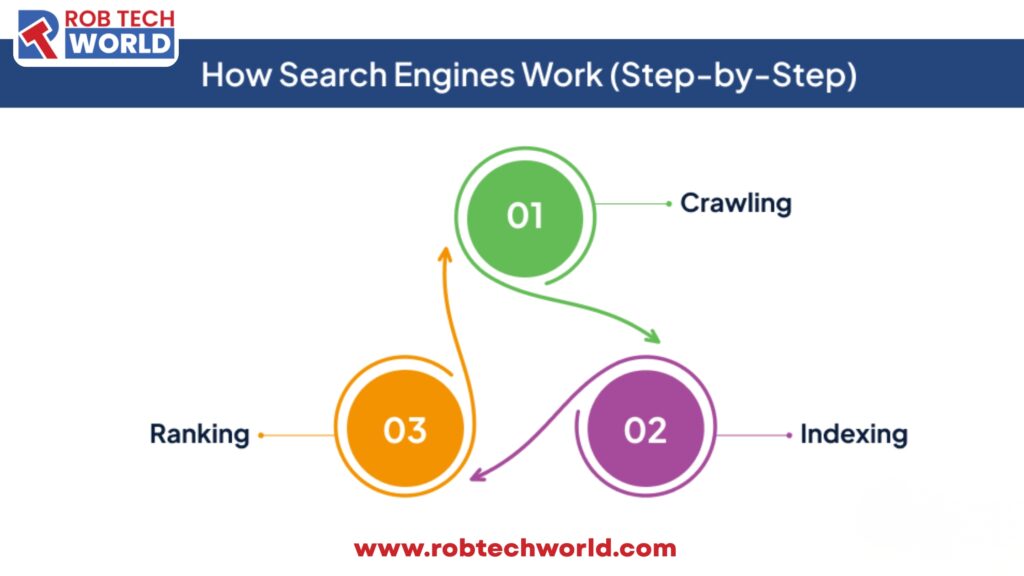
How Search Engines Work Step by Step in 2026?
Understanding how search engines work helps businesses improve visibility and SEO performance. Search engines follow a structured process to discover and rank content online.
Crawling the Internet for New Content
Search engines use bots to scan websites and discover new pages, updates, images, and videos. These bots follow links from one page to another to explore content across the web.
Indexing Web Pages and Information
After crawling, the collected information is stored in a massive database called an index. Indexed content becomes eligible to appear in search results.
Understanding Search Intent and Meaning
Modern algorithms analyze keywords, user intent, location, and behavior to understand what users truly want from a query.
Ranking Pages Based on Relevance
The search engine then ranks pages according to hundreds of ranking factors. Websites with better quality signals achieve higher visibility.
Displaying Results to Users Quickly
Finally, search engines show results within seconds using advanced ranking systems and AI-powered filtering technologies.
This process forms the foundation of search engine positioning and modern SEO strategies.
SEO Basics Every Beginner Should Understand
Learning seo basics is essential for improving website performance and search visibility. SEO, or Search Engine Optimization, refers to techniques used to increase organic rankings in search results.
Important SEO fundamentals include:
- Creating high-quality original content
- Using relevant keywords naturally
- Optimizing website loading speed
- Improving mobile responsiveness
- Building quality backlinks
- Using proper heading structures
- Writing user-focused content
- Enhancing technical SEO elements
Strong SEO practices help websites gain authority and improve user experience at the same time.
Search Engine Positioning Strategies That Matter
Search engine positioning refers to where a website appears in search results for specific keywords. Better positioning leads to more visibility, clicks, and conversions.
In 2026, successful positioning depends on several advanced factors:
Content Quality and User Experience
Search engines prioritize content that provides clear, useful, and trustworthy information.
Search Intent Optimization
Content should directly answer user questions and match search intent accurately.
Mobile and Core Web Vitals Performance
Fast-loading, mobile-friendly websites perform better in rankings.
Authority and Backlink Signals
Trusted websites with quality backlinks gain stronger authority in search algorithms.
AI and Semantic Search Optimization
Modern algorithms understand context, synonyms, and natural language patterns instead of relying only on exact keywords.
Businesses focusing on these areas improve long-term ranking stability and organic growth.
Search Engines Key Ranking Factors in 2026
Search engine algorithms continue evolving rapidly. In 2026, several ranking signals have become increasingly important.
| Ranking Factor | Importance in 2026 |
|---|---|
| Helpful Content | Extremely High |
| Mobile Experience | High |
| Website Speed | High |
| Search Intent Match | Very High |
| AI Content Quality | High |
| User Engagement | High |
| Backlink Authority | Important |
| Technical SEO | Essential |
Search engines now prioritize user satisfaction more than keyword repetition. Websites that genuinely help users tend to rank higher consistently.
The Future of Search Engines Beyond 2026
The future of search technology is being shaped by artificial intelligence, voice search, augmented reality, and personalized experiences. Search engines are becoming more conversational and predictive.
Features expected to grow include:
- AI-generated summaries and overviews
- Voice-first search experiences
- Visual and image-based search
- Hyper-personalized search results
- Real-time predictive search assistance
As technology evolves, businesses will need to focus more on user experience, structured data, and content authority.
Challenges Businesses Face With Modern SEO
The growing complexity of algorithms creates several challenges for website owners and marketers.
Increasing Competition Across Industries
Millions of new pages are published daily, making competition more intense.
Constant Algorithm Updates
Frequent search engine updates require businesses to adapt strategies regularly.
AI Content Saturation
The rise of automated content has increased the need for authentic, high-value information.
Technical SEO Complexity
Website optimization now requires deeper technical expertise and performance monitoring.
Businesses must stay updated to maintain consistent rankings in competitive markets.
Opportunities Created by Search Engine Growth
Despite challenges, search engines continue creating powerful opportunities for businesses and content creators.
Global Reach Through Organic Search
Businesses can attract audiences worldwide without relying entirely on paid advertising.
Better Audience Targeting
Search intent analysis allows brands to reach highly relevant users.
Long-Term Brand Authority Building
High-ranking content helps establish trust and industry credibility.
Increased Local Search Visibility
Local SEO creates opportunities for businesses targeting nearby customers.
Companies like Rob Tech World continue adapting to modern SEO trends by focusing on quality-driven digital strategies and user-centered optimization methods.
Conclusion on Search Engine Basics in 2026
Understanding Search Engine Basics is more important than ever in the digital landscape of 2026. Search engines continue evolving through artificial intelligence, semantic understanding, and advanced ranking systems that prioritize user satisfaction.
Businesses and website owners who focus on quality content, technical optimization, and strong user experience are more likely to achieve better search engine positioning and sustainable organic growth. By learning seo basics and adapting to changing algorithms, brands can remain competitive in the future of online search.
Frequently Asked Questions About Search Engines
1. What is a Search Engine in simple words?
A Search Engine is a system that helps users find websites and information online by analyzing and ranking web pages.
2. What are the seo basics beginners should learn?
Beginners should focus on content quality, keywords, website speed, backlinks, and mobile optimization.
3. Can you list three search engines?
Yes, Google, Bing, and Yahoo are among the most widely used search engines globally.
4. What is search engine positioning?
Search engine positioning refers to a website’s ranking position in search results for targeted keywords.
5. How do search engines rank websites in 2026?
They use AI, content quality, search intent, user experience, backlinks, and technical SEO signals to determine rankings.