


A strong backlink profile plays an important role in improving website authority, search visibility, and organic rankings. However, not every website link contributes positively to SEO. Some backlinks may come from irrelevant websites, spammy directories, suspicious domains, or manipulative link-building practices that can affect your website’s performance. This is where a Backlink Audit becomes essential. It helps identify harmful links, evaluate link quality, and uncover opportunities to strengthen your website’s authority.
If your website is experiencing unexpected ranking drops, declining organic traffic, or slow SEO progress, your backlink profile deserves attention. Regular backlink analysis helps you understand which websites link to your pages, whether those links are relevant, and how they contribute to your overall SEO strategy.
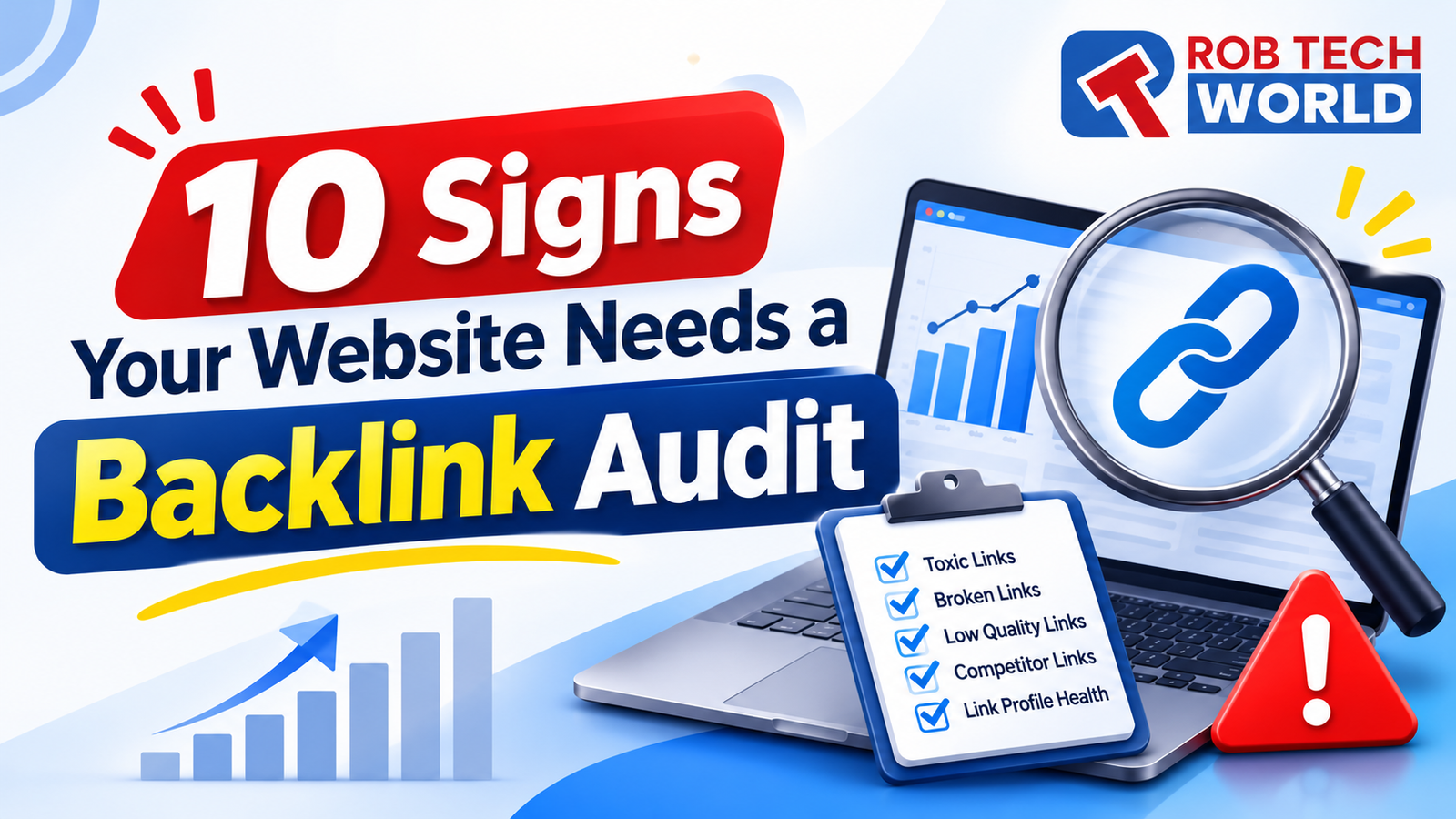
In this blog, we will discuss 10 important signs that indicate your website needs a backlink audit and explain how identifying backlink issues can help protect your website’s search performance.
What Is a Backlink Audit and Why Does It Matter?
A backlink audit is the process of reviewing and evaluating all external links pointing to your website. It helps you understand the quality, relevance, authority, and overall health of your backlink profile.
Search engines consider backlinks as one of several signals when evaluating website authority and relevance. However, link quality matters more than simply having a large number of backlinks.
A proper backlink review helps you:
- Identify spammy, unnatural, or potentially harmful links.
- Find irrelevant websites linking to your pages.
- Detect sudden and unusual changes in backlink growth.
- Identify lost or broken backlinks.
- Review anchor text distribution.
- Discover opportunities to earn relevant, high-quality links.
- Understand whether your link-building strategy follows search engine guidelines.
For businesses investing in SEO, reviewing backlinks regularly can help identify potential issues before they become larger problems.
10 Signs Your Website Needs a Backlink Audit
Not every website requires an immediate backlink cleanup. However, certain performance changes and backlink patterns indicate that your link profile needs a closer examination.
Here are 10 important signs to watch for.
1. Your Website Experiences Sudden Ranking Drops
A noticeable decline in keyword rankings is one reason to investigate your backlink profile.
If several important pages suddenly lose their positions in search results, reviewing your backlinks can help identify possible issues. For example, your website may have acquired links from suspicious domains, experienced unnatural link growth, or lost valuable backlinks.
However, ranking fluctuations do not always indicate backlink problems. Search algorithm updates, technical SEO errors, content quality, and increased competition can also affect rankings.
A backlink audit helps determine whether external links could be contributing to the decline.
2. Your Organic Traffic Has Declined Unexpectedly
Organic traffic is an important indicator of website search performance. When visitors from search engines decrease without an obvious reason, it may be worth examining your backlink profile.
A sudden traffic decline could be associated with:
- Loss of backlinks from relevant websites.
- Reduced link authority to important pages.
- Unnatural backlinks pointing to your domain.
- Changes in search engine algorithms.
- Competitors gaining stronger backlink profiles.
Compare your organic traffic trends with backlink data to identify possible connections. Tools such as Google Search Console and Google Analytics can help you investigate traffic changes alongside other SEO factors.
3. You Notice Too Many Spammy Backlinks
A large number of suspicious backlinks can make your backlink profile look unnatural and deserves investigation.
These links may come from websites with unrelated content, automatically generated pages, low-quality link directories, or domains created primarily for manipulating search rankings.
Some common examples include:
- Links from unrelated foreign-language websites.
- Automatically generated blog comments.
- Irrelevant website directories.
- Pages filled with excessive outbound links.
- Suspicious websites with duplicated or meaningless content.
Not every low-quality backlink will negatively affect your website. Google’s systems can often ignore spammy links automatically. Still, identifying unusual link patterns is important for maintaining a healthy SEO strategy.
4. Your Backlink Growth Looks Unnatural
Consistent backlink growth can support long-term SEO, but sudden and unexplained increases deserve attention.
For example, if your website normally receives 10–20 new referring domains monthly but suddenly gains hundreds of links within a few days, you should investigate their sources.
Unusual backlink growth may result from:
- Automated link-building campaigns.
- Low-quality bulk backlink packages.
- Unauthorised negative SEO attempts.
- Sitewide links from unrelated websites.
- Poor-quality guest posting networks.
A backlink audit helps identify when and where these links appeared, allowing you to investigate whether the growth is natural or suspicious.
5. Your Website Has Lost Valuable Backlinks
Backlink acquisition is only one part of link-building. Maintaining existing quality backlinks is equally important.
When trusted websites remove links pointing to your pages, you may lose valuable referral traffic and potential SEO benefits. This is particularly important when backlinks come from industry publications, authoritative blogs, business partners, or relevant resource pages.
Common reasons for backlink loss include:
- The referring website has deleted the linking page.
- Your linked page has been removed or redirected incorrectly.
- The website owner has updated the content and removed your link.
- The referring domain has expired or become inactive.
- Your website URL has changed without proper redirection.
During an audit, identify lost backlinks and check whether the linking website still has relevant content. If the link was valuable, consider contacting the website owner to understand whether it can be restored.
6. Your Anchor Text Distribution Looks Unnatural
Anchor text is the clickable text used in a hyperlink. It provides context about the linked page and helps users understand where a link will take them.
However, using the same keyword-rich anchor text repeatedly across multiple websites can create an unnatural backlink pattern.
For example, if most backlinks pointing to your website use an exact-match keyword such as “best web development company in India,” it may indicate overly aggressive link-building practices.
A natural backlink profile generally includes different anchor text variations, such as:
- Branded anchors: Your company or website name.
- Generic anchors: Click here, read more, or visit website.
- Naked URLs: Your website’s direct URL.
- Partial-match anchors: Variations of your target keywords.
- Descriptive anchors: Natural phrases explaining the linked content.
Reviewing anchor text distribution helps identify over-optimization and opportunities to make your link-building strategy more balanced.
7. You Have Backlinks From Irrelevant Websites
Relevance is an important consideration when evaluating backlinks. A link from a website covering a completely unrelated subject may provide limited contextual value.
For example, a web development company receiving backlinks from unrelated gambling, adult entertainment, or suspicious financial websites should investigate those links.
During a backlink audit, evaluate whether referring websites:
- Cover topics related to your industry.
- Publish original and useful content.
- Have a genuine audience.
- Link naturally within relevant content.
- Maintain a legitimate online presence.
A relevant backlink from a smaller industry website can be more valuable than a link from a large but unrelated website.
8. Your Website Has Received a Manual Action
A manual action is a penalty applied by Google when its review team identifies a website that violates Google’s spam policies.
Some manual actions are related to unnatural inbound links pointing to a website. This can happen when backlinks are acquired through manipulative practices intended to influence search rankings.
You may receive a notification through Google Search Console if your website is affected.
If you notice a manual action related to unnatural links, review your backlink profile carefully. Identify links that violate Google’s guidelines, make reasonable efforts to remove or qualify problematic links, and prepare a disavow file if appropriate.
After addressing the issues, submit a reconsideration request through Google Search Console.
Important: A decline in rankings does not automatically mean your website has received a penalty. Check the Manual Actions report before assuming that a penalty exists.
9. Your Competitors Have Stronger Backlink Profiles
If competing websites consistently rank above your pages despite having similar content and search intent, their backlink profiles may offer useful insights.
Competitors may have stronger links from industry publications, authoritative websites, business directories, relevant blogs, and resource pages.
A competitor backlink analysis can help you identify:
- Websites linking to multiple competitors.
- Relevant industry publications accepting contributions.
- Resource pages that reference competing businesses.
- Content attracting natural backlinks.
- Link-building opportunities you have not explored.
The objective is not to copy every competitor backlink. Instead, identify relevant websites and understand how you can earn genuine links through valuable content, partnerships, and digital PR.
10. You Have Never Reviewed Your Backlink Profile
One of the clearest reasons to conduct a backlink audit is that you have never performed one before.
Over time, websites naturally accumulate backlinks from different sources. Some links may become outdated, referring domains may disappear, and new links may appear without your knowledge.
Without regular monitoring, it becomes difficult to understand how your backlink profile changes.
Even if your website is performing well, a periodic backlink review can help you:
- Understand your referring domain growth.
- Identify unusual linking patterns.
- Monitor lost and newly acquired backlinks.
- Review anchor text distribution.
- Evaluate your link-building campaigns.
- Find new opportunities for quality backlinks.
A proactive approach makes backlink management more organised and helps you make informed SEO decisions.
What Should You Check During a Backlink Audit?
Identifying warning signs is only the first step. You also need to evaluate different aspects of your backlink profile to understand its overall condition.
The following table highlights important factors to review.
| Audit Factor | What to Check | Why It Matters |
|---|---|---|
| Referring domains | Number and quality of linking websites | Understand backlink diversity |
| Link relevance | Industry and content relationship | Evaluate contextual relevance |
| Anchor text | Branded, generic, and keyword-rich anchors | Identify over-optimization |
| Link attributes | Follow, nofollow, sponsored, and UGC | Understand link qualification |
| Lost backlinks | Removed or broken links | Identify recovery opportunities |
| Spam patterns | Suspicious domains and unnatural links | Investigate potential risks |
| Link growth | Sudden increases or unusual patterns | Detect unexpected changes |
How to Perform a Backlink Audit Effectively?
A structured process makes backlink analysis easier and helps you avoid removing links unnecessarily.
Step 1: Collect Your Backlink Data
Start by exporting your website’s backlink information using tools such as Google Search Console, Ahrefs, Semrush, or other backlink analysis platforms.
Collect information about referring domains, linking pages, anchor text, link attributes, and newly acquired or lost backlinks.
Using more than one data source can provide a broader picture because backlink tools do not always discover the same links.
Step 2: Identify Potentially Problematic Links
Review your backlink data to identify suspicious patterns, irrelevant sources, unnatural anchor text, and links associated with manipulative SEO practices.
Do not classify a backlink as harmful based only on a low domain authority score or a third-party toxicity metric. These scores are indicators for further investigation, not Google’s official penalty assessments.
Step 3: Evaluate Link Quality and Relevance
Check the actual referring pages instead of relying entirely on automated reports.
Look at the website’s content, editorial standards, audience, link placement, and overall credibility. This helps distinguish legitimate backlinks from genuinely suspicious ones.
Step 4: Take Appropriate Action
Once you identify problematic backlinks, decide what action is necessary.
- Contact website owners when removal is appropriate.
- Review whether paid or sponsored links have been properly qualified.
- Investigate unnatural link-building campaigns.
- Use Google’s disavow tool only when there is a substantial number of spammy or artificial links and a manual action or likely manual action risk.
Avoid disavowing links simply because an automated tool labels them toxic. Incorrect disavowal can remove useful backlink signals.
Step 5: Monitor Your Backlink Profile
Backlink management should not end after one audit. Monitor newly acquired and lost links, track referring domain changes, and review your website’s organic search performance regularly.
This helps you identify unusual patterns and make timely improvements to your SEO strategy.
How Often Should You Conduct a Backlink Audit?
The ideal frequency depends on your website’s size, backlink acquisition rate, and SEO audit.
For most business websites, conducting a backlink audit every three to six months is a practical approach. However, websites running active link-building campaigns or experiencing unexpected ranking changes may benefit from more frequent reviews.
Consider conducting an additional audit when:
- Your website experiences a significant organic traffic decline.
- You launch a new link-building campaign.
- You notice an unusual increase in referring domains.
- Google Search Console reports a manual action.
- You acquire or migrate an existing website.
Regular monitoring helps you understand backlink changes and maintain a more reliable SEO strategy.
Build a Healthier Backlink Profile With Rob Tech World
A healthy backlink profile requires more than acquiring a large number of links. It involves understanding link quality, maintaining relevance, identifying unusual patterns, and following sustainable SEO practices.
At Rob Tech World, we help businesses strengthen their online presence through data-driven digital marketing, SEO, web development, and performance-focused strategies.
With 7+ years of industry experience, 25+ professionals, and 750+ completed projects, our team focuses on helping businesses improve search visibility, attract qualified traffic, and build websites that support long-term growth.
Whether you need backlink analysis, technical SEO improvements, or a comprehensive website growth strategy, we can help you identify opportunities and make informed decisions.
Ready to improve your website’s SEO performance?
Get a Free Consultation With Rob Tech World and take the next step towards building a stronger online presence.
Frequently Asked Questions About Backlink Audits
1. What is a backlink audit in SEO?
A backlink audit is the process of analysing external links pointing to your website. It helps evaluate link quality, relevance, anchor text, referring domains, and potentially unnatural links that may require further investigation.
2. Can bad backlinks affect website rankings?
Unnatural backlinks created to manipulate search rankings can violate Google’s spam policies and may result in manual actions. However, Google automatically ignores many spammy links, so not every low-quality backlink negatively affects rankings.
3. Which tools are best for conducting a backlink audit?
Popular backlink analysis tools include Ahrefs, Semrush, Moz Link Explorer, and Google Search Console. These tools help identify referring domains, anchor text, lost backlinks, and unusual linking patterns.
4. Should I disavow all toxic backlinks?
No. You should not disavow every backlink flagged as toxic by third-party tools. Google can generally identify and ignore many spammy links. The disavow tool is mainly intended for situations involving substantial unnatural link patterns and a manual action or likely manual action risk.
5. How long does a backlink audit take?
The time required depends on your website’s backlink profile, number of referring domains, and complexity of the issues. A small website may require a few hours, while larger websites with thousands of backlinks may need several days for detailed analysis and review.