






Google Search is becoming more visual, changing the way people discover information, products, businesses, and websites. With the introduction of web multimodal search reporting in Google Search Console, website owners can now gain more visibility into how their content performs when users search with images and other visual inputs. Google announced this update on September 24, 2026, adding multimodal search insights to the Search results Performance report and the Generative AI features performance report.
For businesses investing in SEO, this development provides another way to understand how audiences discover their content. Instead of relying only on typed queries, site owners can now examine performance associated with visual search experiences and use that information to improve their content strategy.
What Is Web Multimodal Search in Search Console?
Web multimodal search refers to search experiences where users can use visual information, such as an image or camera input, to find information on the web. Instead of entering a traditional text query, users can start their search from something they see.
Google’s new Search Console reporting covers several visual search experiences, including Google Lens, Circle to Search on Android, image uploads to Google Search, and Chrome’s right-click “Search this image” feature.
This matters because visual discovery can connect users with web pages that provide information related to the image they searched for. For website owners, the new reporting creates an opportunity to understand whether their content is receiving visibility and traffic through these emerging search behaviors.
The update is rolling out globally, and metrics will appear in the Performance report when a website receives traffic from these types of queries.
Why Multimodal Search Matters for Website Owners?
Search behavior is no longer limited to typing keywords into a search box. People increasingly use cameras, screenshots, images, and visual objects as starting points for discovering information.
For example, a user might see a product, building, plant, piece of furniture, or another object and use their phone camera to search for information about it. The resulting search journey can lead users toward relevant websites and pages.
This creates another opportunity for businesses to make their content discoverable.
Traditional SEO still matters, but visual assets can also contribute to how users find and interact with a website. High-quality images, descriptive page content, relevant context, and technically accessible pages can all support a broader search strategy.
The new Search Console data does not replace existing SEO metrics. Instead, it provides another layer of information that businesses can use when evaluating their organic search presence.
How Google’s New Search Reporting Works?
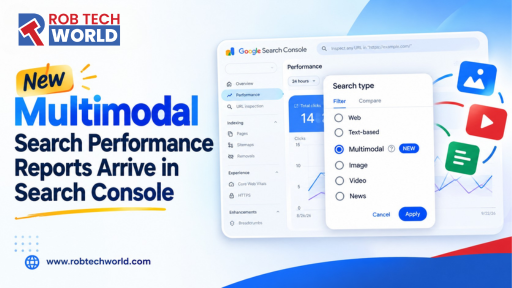
Google has added a new multimodal search type filter to the Performance reports. Website owners can use this filter to isolate data associated with multimodal search activity.
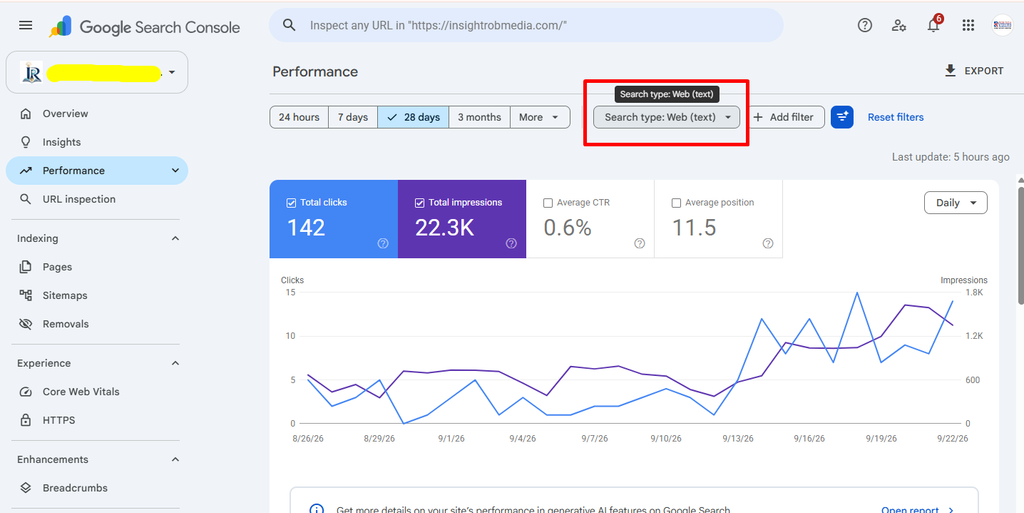
Search Console’s Performance report already provides information such as clicks, impressions, click-through rate, and average position. Users can also examine performance by dimensions such as pages, countries, devices, and queries.
The new filter makes it possible to focus specifically on the multimodal portion of the available data.
| Search Console feature | What it helps you understand |
|---|---|
| Multimodal search filter | Performance associated with visual search activity |
| Clicks | Visits generated from eligible search interactions |
| Impressions | How often your content was shown |
| CTR | The percentage of impressions resulting in clicks |
| Pages | Which website URLs receive visibility |
| Countries | Where search activity originates |
| Devices | Devices used to access Search |
| Export | Download data for deeper analysis |
The available data can then be exported from Search Console for analysis in spreadsheets, reporting platforms, or other SEO tools.
What Search Experiences Are Included?
The update is focused on visual ways users can initiate searches. According to Google, the reported data includes several established visual search experiences.
Google Lens
Google Lens allows users to search using images and camera-based inputs. Rather than describing an object with words, users can use an image to begin the discovery process.
For businesses, this can make visual content an increasingly important part of search visibility.
Circle to Search on Android
Circle to Search lets users interact with content displayed on their Android devices and search for information about what they see. This creates another pathway between visual discovery and web content.
Image Uploads to Google Search
Users can also upload images to Google Search as part of their search process. Relevant web pages may become part of the resulting discovery journey.
Chrome’s “Search This Image”
Chrome users can right-click an image and choose the option to search for that image. Google now includes this type of activity within the new multimodal reporting.
Together, these experiences show why businesses should consider visual discoverability as part of a wider SEO strategy.
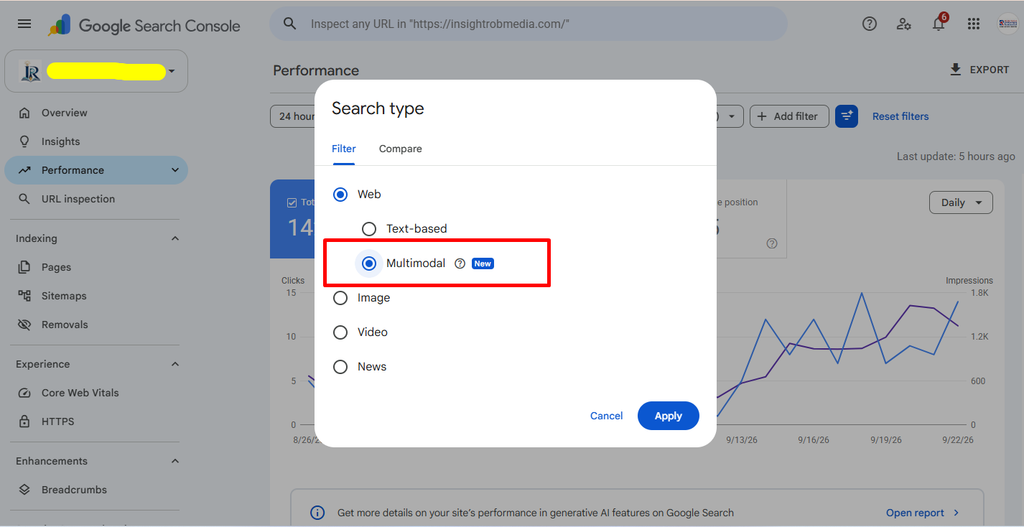
How to Find Multimodal Search Data?
Accessing the new data is designed to fit into the existing Search Console workflow.
Start by opening the Performance report for Search results and locating the search type controls. Google has introduced a new multimodal search type filter that allows website owners to examine this specific category of search activity.
Once selected, you can review the available performance information and compare it with your broader Search data.
Search Console also allows users to change date ranges, apply filters, compare datasets, and examine information across different dimensions.
If you need the information for a larger SEO report, use the Export option to download the available data and analyze it outside Search Console.
Multimodal Search Performance: What Should You Track?
The new reporting can be useful, but the data becomes more valuable when it is reviewed alongside other SEO signals.
Start by looking at impressions. This can help you understand whether your website is receiving visibility through multimodal search.
Next, examine clicks. Visibility does not automatically mean users visit your website, so clicks provide another useful indicator of search engagement.
CTR can also help identify pages that receive impressions but comparatively fewer clicks. However, CTR should always be interpreted within the context of the specific search experience and query intent.
Finally, examine which pages are appearing. Identifying pages that receive multimodal visibility can reveal which types of content and visual assets are attracting search exposure.
Google recommends focusing on trends rather than relying on a single metric or isolated data point when evaluating Search Console performance.
How Businesses Can Improve Visual Search Readiness?
The new reporting provides data, but businesses still need a strong content and technical foundation to benefit from changing search behavior.
Create Useful and Relevant Visual Content
Images should support the purpose of the page rather than exist simply for decoration. Product images, service visuals, diagrams, original photography, and explanatory graphics can help users understand your content.
Where appropriate, provide enough surrounding text to explain what an image represents and why it is relevant.
Keep Images Closely Connected to Page Content
An image works best when it supports the topic of the page. A page about a particular service should contain visual content that accurately represents that service.
Strong topical alignment can make the overall page more useful to both users and search engines.
Strengthen On-Page SEO
Visual optimization should not replace fundamental SEO practices.
Businesses should continue focusing on useful content, clear page structure, descriptive titles, relevant headings, internal linking, mobile usability, technical accessibility, and strong page performance.
Search Console’s existing reports can help identify which pages and queries are already generating organic visibility.
Monitor Changes Over Time
New search formats can produce limited data initially, particularly for websites that do not receive significant visual-search traffic.
Rather than making major changes based on a short period, monitor performance over time and look for meaningful trends.
Search Console notes that some of the newest performance data can be preliminary and may change as data collection is completed.
Performance Reports Arrive in Search Console With AI Insights
Google’s multimodal reporting also connects with the broader evolution of Search Console reporting.
The Generative AI performance report provides information about how websites perform in Google’s generative AI features, including AI Overviews and AI Mode. Google says this report has been rolled out globally, although availability can still depend on whether a property has sufficient qualifying impressions.
The combination of multimodal and generative AI reporting reflects a wider change in how websites are discovered.
Search visibility increasingly involves different interfaces and user behaviors. Businesses therefore benefit from looking beyond a single ranking position and examining how their content appears across different search experiences.
What This Update Means for SEO Strategy?
The introduction of multimodal reporting does not mean that traditional SEO has become less important. Instead, it expands the amount of information available to website owners.
An effective strategy can combine conventional search optimization with stronger visual content practices.
For example, businesses can use Search Console to identify pages receiving multimodal impressions, review their content and imagery, evaluate user intent, and determine whether improvements are appropriate.
The goal should not be to create images simply to generate search traffic. The better approach is to create useful visual assets that genuinely support the user’s need while maintaining a technically sound website.
For businesses working on long-term organic visibility, this approach can make visual search another measurable part of their SEO strategy.
How Rob Tech World Can Support Your SEO Strategy?
Understanding new Search Console data is only one part of building a search-ready website. Businesses also need a website that is fast, responsive, secure, technically accessible, and structured around user intent.
Rob Tech World provides web design, development, SEO, and digital solutions for businesses across India and international markets. With 7+ years of industry experience, 20+ professionals, and 400+ completed projects, the company combines technical development with search-focused website strategies.
From WordPress and WooCommerce to custom PHP, Laravel, Shopify, and responsive business websites, the focus is on creating digital platforms that support usability, performance, security, and search visibility.
As search continues to evolve toward visual, multimodal, and AI-assisted experiences, having a strong technical and content foundation can help businesses adapt to new opportunities.
Frequently Asked Questions About Multimodal Search
1. What is web multimodal search?
Web multimodal search allows users to begin a Google search using visual inputs such as images or camera-based searches instead of relying only on typed text. Google’s new Search Console reporting provides data related to supported multimodal search experiences.
2. What does the new Search Console multimodal filter show?
The new filter helps website owners view performance associated with multimodal search activity. The available Performance report includes metrics such as clicks, impressions, CTR, and average position, depending on the applicable report and data.
3. Which visual searches are included in the new report?
Google says the reporting includes searches involving Google Lens, Circle to Search on Android, image uploads to Google Search, and Chrome’s right-click “Search this image” feature.
4. Can I export multimodal search performance data?
Yes. Google provides an Export option in the relevant Performance reporting interfaces, allowing available data to be downloaded for further analysis in other tools.
5. How can businesses prepare for multimodal search?
Businesses can focus on useful and relevant visual content, strong page context, descriptive content, mobile-friendly design, technical SEO, and overall website quality. Monitoring Search Console data can then help identify how visual search contributes to website visibility.
Prepare Your Website for the Next Evolution of Search
The arrival of web multimodal search reporting gives website owners a clearer way to understand how visual search contributes to organic visibility. By monitoring the new data, reviewing high-performing pages, and improving visual and technical content, businesses can make more informed SEO decisions.
Search is continuing to expand beyond traditional text-based interactions. Websites that combine useful content, strong visual assets, technical performance, and user-focused experiences can be better positioned to adapt to these changes.
If your website needs a stronger foundation for modern search, Rob Tech World can help with website development, SEO, performance optimization, and digital strategy. Get in touch with Rob Tech World today to build a search-ready website designed for today’s evolving Google Search landscape.