
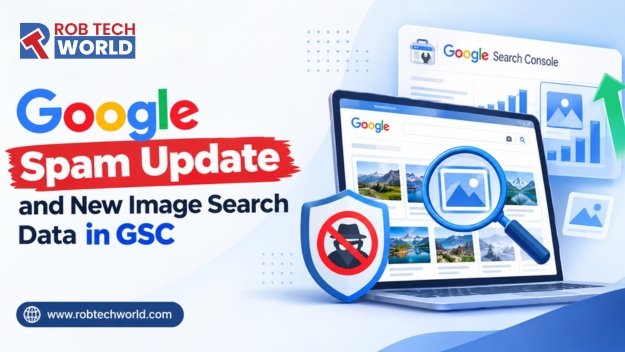




The Google Spam Update and New Image Search Data in GSC are two important developments for website owners and SEO professionals in September 2026. Google started rolling out the September 2026 spam update on September 24, while Google Search Console introduced new reporting for web multimodal search. Together, these changes highlight two areas that deserve attention: maintaining search-quality best practices and understanding how users discover content through visual search.
The spam update is focused on Google’s search ranking systems, while the new Search Console reporting gives site owners more visibility into how their content is discovered through visual and multimodal searches.
For businesses that depend on organic search, understanding both updates can help make SEO monitoring more accurate and content strategies more aligned with how Google Search is evolving.
What Is Google’s September 2026 Spam Update?
Google began the September 2026 spam update on September 24, 2026. According to Google’s Search Status Dashboard, the update applies globally and across all languages, and the rollout may take up to two weeks to complete.
This is a spam-focused ranking update rather than a general core update. Its relevance is therefore different from a core update, which can involve broader changes to how Google evaluates and ranks content.
Because the September update is still rolling out, website owners should avoid making conclusions based on a few days of ranking movement. Search visibility can fluctuate while an update is in progress.
Google’s status dashboard lists the September 2026 spam update as affecting ranking, rather than crawling, indexing, or serving.
How the Spam Update Can Affect Websites?
A spam update can lead to changes in organic visibility for websites that Google’s systems identify as violating or attempting to manipulate its spam policies.
However, not every ranking change during a spam update means a website has received a spam-related action.
Search rankings naturally fluctuate for many reasons, including algorithmic changes, competitors, search demand, indexing changes, and changes to search results.
Website owners should therefore compare performance over a meaningful period rather than reacting to a single day’s ranking data.
What Website Owners Should Monitor
During the rollout, businesses can monitor:
- Organic clicks and impressions
- Important keyword rankings
- Landing-page traffic
- Indexed pages
- Search Console performance
- Sudden traffic changes
- Manual actions or security issues
- Changes in high-value pages
A page-level review can also help identify whether traffic changes are concentrated around particular sections of a website.
What Is the New Image Search Data in GSC?
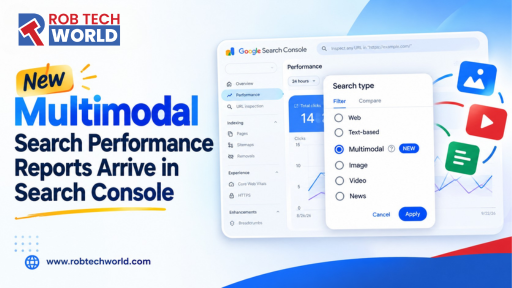
Google has introduced new web multimodal search reporting in Search Console. The reporting is available through a new multimodal search type filter in the Performance reports.
The new reporting is designed to show how users discover website content through visual and multimodal search experiences.
Google says the data includes searches involving:
| Search Experience | What It Means |
|---|---|
| Google Lens | Users search using visual information |
| Circle to Search | Users search objects or information selected on Android |
| Image uploads | Users submit an image to Google Search |
| Search this image | Users use Chrome’s right-click image search feature |
This gives website owners another way to understand how their content is appearing in Google’s changing search environment.
Why Multimodal Search Data Matters for SEO?
Search is no longer limited to users typing keywords into a search box. People can increasingly start searches with images, objects, screenshots, or visual references.
For businesses, this creates another layer of search behaviour to understand.
A product image, location photograph, infographic, diagram, or other visual asset may help users discover a website through a visual search journey.
The new Search Console data provides a way to examine this activity instead of relying only on traditional text-based search reporting.
Google says the multimodal reporting is also available in the Performance report for Generative AI features.
How to Find the New Multimodal Data?
Website owners can access the Performance reports in Google Search Console and use the new multimodal search type filter.
The data can also be exported for further analysis. Google says the feature is rolling out globally and that metrics will appear when a site receives traffic from these types of queries.
This means some websites may not immediately see significant data if they have not received traffic from supported multimodal search experiences.
How Image Search Changes the SEO Approach?
The new reporting does not mean businesses should abandon traditional SEO. Instead, it provides another data point for understanding search behaviour.
Visual optimisation should work alongside strong content, technical SEO, structured information, internal linking, and a good user experience.
For example, an e-commerce website can pay attention to product images, while a service business may benefit from original photographs showing completed projects, facilities, products, or processes.
Optimise Images With Useful Context
Images should be relevant to the page and supported by useful surrounding content.
Important considerations include:
- Descriptive image filenames
- Appropriate alt text
- Relevant page content
- High-quality original visuals
- Mobile-friendly image presentation
- Suitable image dimensions
- Fast loading performance
- Contextual captions where useful
The goal should not be to insert keywords into every image element. Instead, image information should accurately describe what users can see and understand from the visual.
What Businesses Should Do During the Spam Update?
The best response to an algorithm update is usually to review the website rather than make sudden, large-scale changes based only on ranking fluctuations.
Start by checking Search Console and analytics data before, during, and after the update.
Look for patterns rather than isolated changes.
If an important page loses visibility, review its content quality, search intent, technical accessibility, internal links, and overall usefulness. Also check whether competitors or search-result features have changed.
Businesses should continue following Google’s spam policies and avoid tactics intended primarily to manipulate rankings.
What Businesses Should Do With New Image Data?
The new multimodal reporting can be used as an additional source of SEO insight.
Once enough data is available, businesses can compare multimodal performance with traditional web search performance.
For example, a website could investigate:
- Which pages receive multimodal traffic?
- Which images are associated with those pages?
- Are product pages receiving visual-search activity?
- Are informational pages attracting image-based discovery?
- Which types of visual assets appear most useful?
- Does multimodal traffic contribute to meaningful engagement?
This can help businesses decide where improving visual content could support their broader search strategy.
Why Visual Content Needs More Attention?
As search experiences become more visual, businesses have more reasons to treat images as useful search assets rather than simple design elements.
A good image can explain a product, demonstrate a service, show a location, support an instructional article, or provide context that text alone cannot communicate as quickly.
However, visual SEO should still serve users first.
Adding irrelevant images, repeating stock photographs, or using descriptive text that does not match the image is unlikely to create a strong user experience.
Original and relevant visuals are generally more useful because they provide information that supports the page’s actual purpose.
How SEO Teams Can Track Both Updates?
The September spam update and new multimodal reporting require different types of monitoring.
The spam update calls for attention to search visibility, spam compliance, and ranking changes. Multimodal reporting, meanwhile, provides additional insight into how users discover content.
A simple monitoring framework can include:
| SEO Area | What to Check |
|---|---|
| Spam update | Ranking and organic traffic changes |
| Search Console | Clicks, impressions and queries |
| Multimodal search | Visual-search traffic and performance |
| Content | Relevance, usefulness and originality |
| Images | Relevance, quality and descriptive information |
| Technical SEO | Indexing, crawlability and page performance |
| Analytics | Engagement and conversions |
Keeping these areas separate can make it easier to understand what is actually changing.
What This Means for Future SEO Strategies?
These September 2026 developments show how SEO is expanding beyond traditional keyword tracking.
Search visibility increasingly involves different discovery methods, including text searches, visual searches, multimodal interactions, and AI-powered search experiences.
For businesses, this means SEO strategies need to consider the complete search journey.
Content should answer users’ questions clearly. Images should provide useful visual information. Websites should remain technically accessible and easy to use.
At the same time, businesses need to avoid shortcuts that attempt to manipulate search rankings.
A sustainable SEO strategy is better built around useful content, technically sound websites, relevant visual assets, and ongoing performance analysis.
How Rob Tech World Can Help With Modern SEO?
For businesses adapting to Google’s latest search changes, Rob Tech World combines web development, SEO, performance, and digital strategy to help create websites built for modern search environments.
From WordPress and custom website development to e-commerce, WooCommerce, Shopify, and responsive business websites, the technical foundation of a website can directly affect how effectively its content is discovered and experienced.
SEO teams can also use Search Console data to identify opportunities across traditional search and emerging multimodal experiences.
With the search landscape continuing to evolve, businesses can benefit from regularly reviewing content, technical performance, visual assets, and organic search data rather than treating SEO as a one-time activity.
Frequently Asked Questions About Google’s Latest Updates
1. When did Google’s September 2026 spam update begin?
Google began rolling out the September 2026 spam update on September 24, 2026. Google states that the update applies globally and to all languages, with the rollout potentially taking up to two weeks.
2. What is the new multimodal search filter in Search Console?
The multimodal search filter allows website owners to view performance data associated with visual and multimodal searches. Google says this includes Google Lens, Circle to Search on Android, image uploads to Google Search, and Chrome’s “Search this image” feature.
3. Does the spam update affect every website?
The September 2026 spam update is a global ranking update, but that does not mean every website will experience a noticeable ranking change. Websites can see different effects depending on their content, search visibility, competitors, and Google’s evaluation of search results.
4. Can image optimisation help with multimodal search?
Relevant, high-quality images can support a website’s visual search presence. Businesses should focus on useful original visuals, accurate alt text, descriptive filenames, relevant surrounding content, and good page performance rather than keyword stuffing.
5. How should businesses respond to these Google updates?
Businesses should monitor Search Console and analytics data, review important pages, maintain compliance with Google’s spam policies, and use the new multimodal reporting to understand visual-search activity. Avoid making major SEO changes solely because of short-term fluctuations during an active update.
Stay Ahead of Google’s Changing Search Landscape
Google’s September 2026 spam update and new multimodal Search Console reporting show that search continues to evolve across both quality and discovery.
The spam update reinforces the importance of following search-quality guidelines, while the new image-search data gives businesses another way to understand how users find their content.
For website owners, the practical approach is to monitor performance carefully, strengthen useful content, improve relevant visual assets, and maintain a technically sound website.
Want to prepare your website for Google’s evolving search landscape? Contact Rob Tech World to discuss your website development, SEO, performance, and digital growth requirements.