






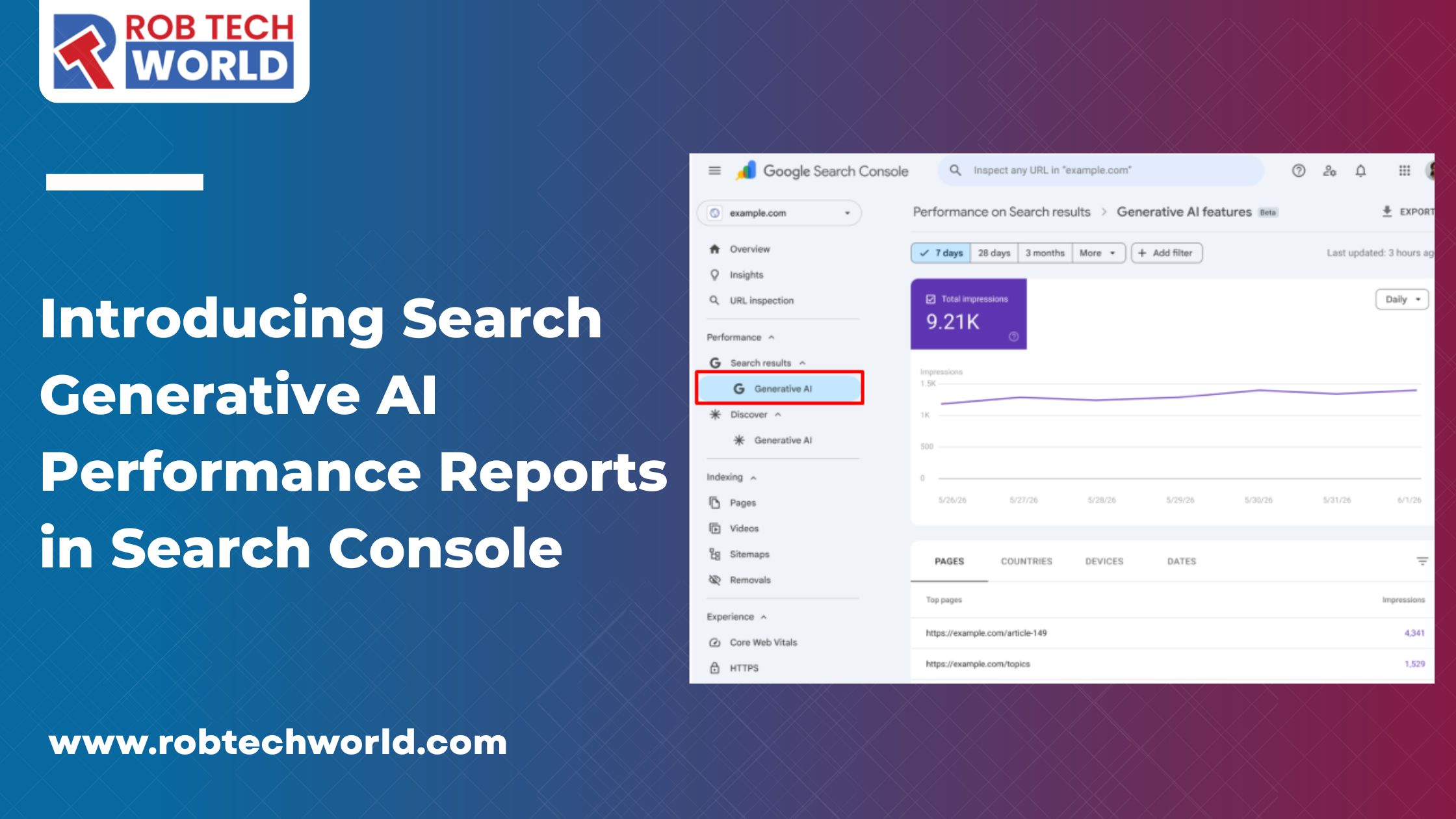
Google has officially introduced a major upgrade to Search Console with the launch of Search Generative AI performance reports, marking a significant shift in how website owners can track visibility in AI-powered search experiences. Announced on June 3, 2026, this update is part of Google’s broader evolution toward AI-driven search results and more transparent performance analytics for publishers and SEOs.
This development is especially important because it finally gives site owners a way to understand how their content performs inside generative AI experiences like AI Overviews and AI Mode, which were previously hidden within aggregated search data.
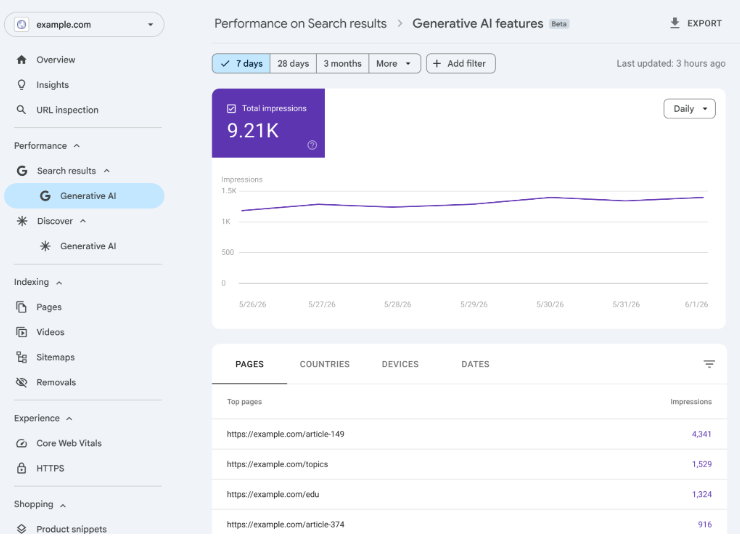
What Are Search Generative AI Performance Reports?
The new reporting system inside Google Search Console is designed to track how websites appear in AI-generated search results, not just traditional blue-link listings.
These reports specifically measure visibility in:
- AI Overviews
- AI Mode results
- Generative AI elements in Google Discover
- Other AI-enhanced search features
Instead of treating AI traffic as part of standard search performance, Google is now separating it into a dedicated analytics layer, giving publishers clearer insight into the impact of generative search.
Unified + Separate Reporting Structure
One of the most important aspects of this update is its dual reporting approach.
Google is not removing AI data from the main Search Console performance report. Instead, it is introducing:
1. Dedicated AI Performance View
This new section focuses only on generative AI visibility, helping users understand:
- How often their pages appear inside AI results
- Which queries and surfaces drive AI exposure
- Performance trends specific to AI search formats
2. Standard Performance Report Integration
At the same time, AI impressions are still included in the main Search Console dashboard, ensuring:
- A complete view of overall search performance
- No data fragmentation for general reporting
- Easier comparison between traditional vs AI-driven search traffic
This hybrid structure ensures both granular analysis and overall visibility tracking.
Key Metrics in AI Performance Reports
Google has introduced more detailed breakdowns than traditional search reporting. These metrics help publishers analyze AI visibility with greater precision.
1. Impressions in AI Results
Tracks how often your website URLs appear inside generative AI responses, even if users do not click immediately.
2. Page-Level Insights
Shows exact URLs that are being surfaced in AI-generated answers, helping identify high-performing content types.
3. Country-Wise Performance
Provides geographical segmentation, allowing analysis of AI visibility across different regions.
4. Device-Based Data
Breaks down performance by device types such as:
- Mobile
- Desktop
- Tablet
This helps understand where AI-driven search is most active.
5. Time-Based Tracking
Offers flexible time granularity, including:
- Hourly data
- Daily trends
- Weekly analysis
- Monthly performance tracking
This enables deeper trend analysis of AI visibility changes over time.
Limited Pilot Rollout Phase
Google is rolling out this feature gradually as part of a controlled testing phase.
Current Status:
- Available only to a limited group of website owners
- Focused on collecting feedback and usage insights
- Designed to ensure accuracy and reliability before global launch
Why a Limited Rollout?
Google aims to:
- Test reporting accuracy at scale
- Improve UI/UX based on real user feedback
- Refine AI visibility signals
- Prevent reporting inconsistencies in early stages
Wider availability is expected after validation from the pilot phase.
Future Improvements Expected
Google has confirmed that this is just the beginning of AI-based reporting inside Search Console.
Future updates may include:
- More detailed query-level AI insights
- Enhanced attribution for AI-driven clicks
- Content type classification (informational, transactional, etc.)
- Deeper integration with Discover and multimodal search
- Expanded historical data comparisons
Feedback from the Search Central Community will play a key role in shaping these improvements.
Conclusion
The introduction of Search Generative AI performance reports in Search Console (June 3, 2026) marks a major milestone in search analytics. For the first time, website owners can clearly understand how their content performs inside AI-powered search environments.
When combined with Google’s evolving Intelligent Search Box, it becomes clear that search is moving rapidly toward a fully AI-driven, conversational experience, where visibility is no longer just about ranking, but also about inclusion in AI-generated answers.
FAQs: Search Generative AI Performance Reports in Search Console
1. What are Search Generative AI performance reports in Search Console?
These are new Google Search Console reports that track how a website appears in AI-powered search experiences like AI Overviews, AI Mode, and other generative search results.
2. When was this update released?
Google announced this feature on June 3, 2026, as part of its Search Central updates focused on AI-driven search visibility tracking.
3. What kind of data do these reports show?
They provide detailed insights including:
- AI impressions (how often pages appear in AI results)
- Page-level visibility (which URLs are shown)
- Country-wise performance
- Device-based data (mobile, desktop, etc.)
- Time-based trends (hourly, daily, monthly)
4. Is AI performance data separate from normal Search Console data?
Yes and no. Google offers a dedicated AI performance view, but the same data is also included in the main Search Console performance report for a unified overview.
5. Who can access these AI reports right now?
The feature is currently in a limited pilot rollout, available only to selected website owners for testing and feedback before a global release.
6. Why is Google introducing AI performance tracking?
Google aims to help website owners understand how their content performs inside generative AI search experiences, which are becoming a major part of modern search behavior, alongside traditional rankings.