





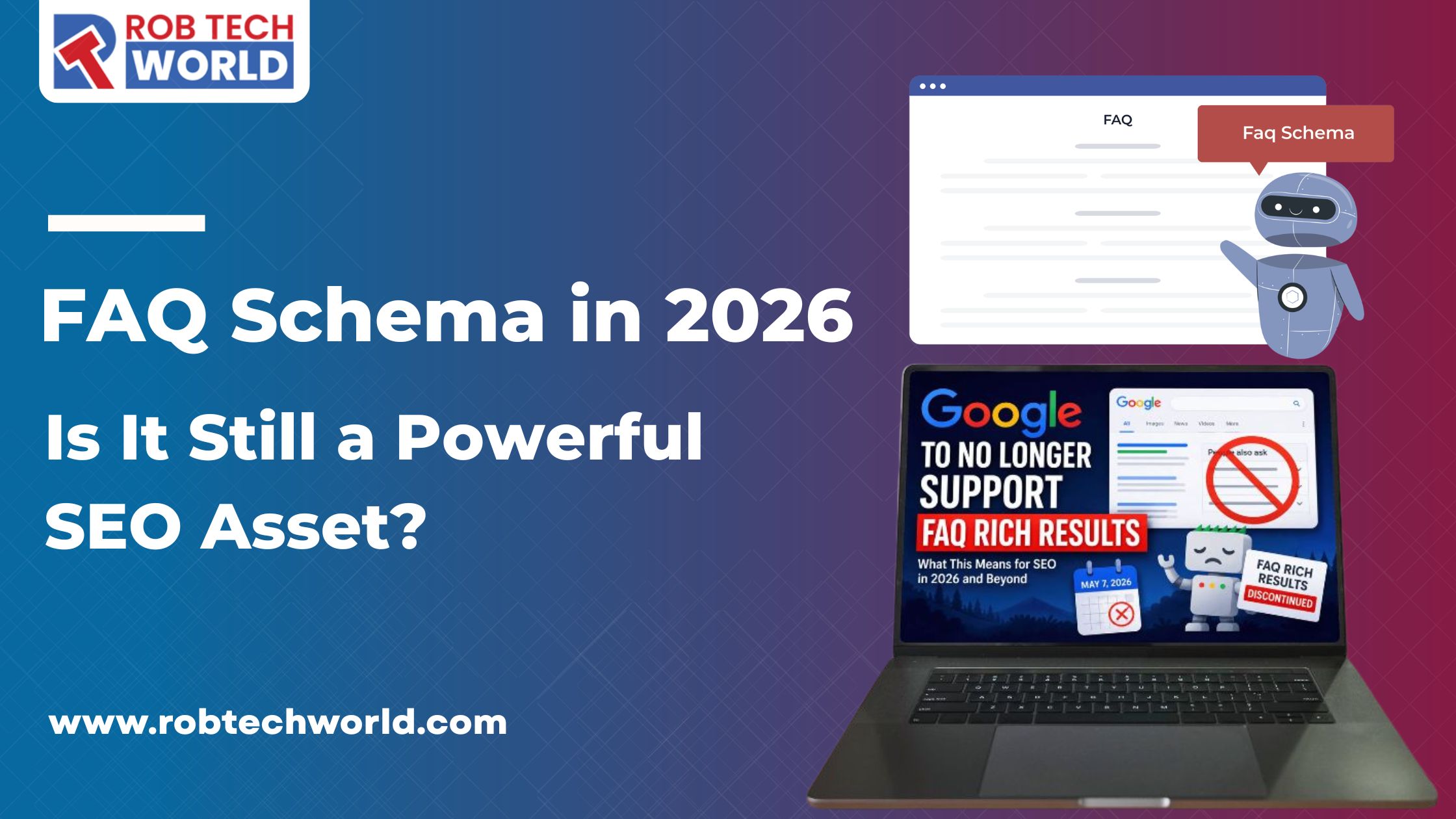
The topic of FAQ Schema in 2026 has gained major attention after a recent Google update that confirmed FAQ rich results are no longer supported for most websites in search results. Earlier, FAQ schema helped websites display expandable question-and-answer snippets directly on Google, improving visibility and click-through rates. However, with this update, those enhanced results are now largely removed for standard websites.
Even with this change, FAQ schema is not completely useless. Its role has shifted from generating visible SERP enhancements to improving how search engines and AI systems understand page content. Structured data still helps Google interpret meaning, context, and relationships between questions and answers.
What is FAQ Schema and FAQ Schema Markup Today?
To understand its current importance, it is necessary to first understand what is the FAQ schema. The FAQ schema is a type of structured data markup that allows search engines to understand frequently asked questions and their answers on a webpage. This is implemented using FAQ schema markup, typically in JSON-LD format.
Even though FAQ rich snippets are no longer widely shown, the markup still plays an important technical role. It helps search engines better organize and process content, making it easier for AI systems and search algorithms to understand the page structure.
Google Update Removing FAQ Rich Results Explained
Google’s recent update has officially reduced support for FAQ rich results across most websites. This means FAQ sections are no longer eligible to appear as expanded snippets in search results for general websites.
Previously, FAQ rich results helped websites gain more visibility and attract higher organic clicks. However, Google has now restricted this feature to only select trusted and authoritative sources. For most websites, including blogs and business pages, FAQ content will now appear only as standard search listings without enhanced display.
Despite this, FAQ schema markup is still read and processed by Google for understanding content context.
Is FAQ Schema Still Relevant for SEO in 2026?
Even after the removal of rich results, faq schema for SEO continues to hold value. The purpose of SEO has evolved beyond just rankings and snippets. Today, search engines focus more on content understanding, relevance, and user intent.
FAQ schema still helps in:
- Improving semantic understanding of page content
- Supporting AI-based search interpretation
- Enhancing topical relevance for long-form content
- Structuring information for better indexing
So while visibility benefits have reduced, technical SEO benefits still remain strong.
Role of FAQ Schema Markup in Modern SEO Systems
FAQ schema markup is still important for helping search engines understand structured content. Even though it no longer guarantees rich snippets, it improves how content is interpreted in search algorithms and AI systems.
Modern search is increasingly driven by AI-generated summaries and conversational responses. Structured data like FAQ schema helps these systems extract accurate answers from web pages. This makes it useful for long-term SEO strategy, even without visible SERP enhancements.
What is FAQ Schema for AI and Search Understanding?
To answer what the FAQ schema in today’s context, it is no longer just a ranking enhancement tool. It is now a content interpretation layer that helps search engines and AI systems understand meaning.
With the rise of AI search tools, structured data is becoming more important for content clarity. The FAQ schema helps machines understand direct question-answer relationships, improving the chances of being included in AI-generated responses and voice search results.
FAQ for SEO and Its Changing Role in 2026
The role of FAQ for SEO has shifted significantly. Earlier, the goal was to gain rich snippets and increase CTR. Now, the focus is on improving content quality and machine readability.
FAQ sections still help SEO by:
- Increasing content depth and relevance
- Reducing user confusion by answering direct queries
- Supporting internal linking and topic coverage
- Helping AI systems identify key information
This makes FAQs a supporting SEO asset rather than a direct ranking factor.
JSON-LD Schema Generator and Implementation Benefits
A JSON-LD schema generator is still widely used to create structured FAQ markup without coding errors. These tools help ensure that the schema is properly formatted and follows Google’s guidelines.
Even in 2026, correct implementation matters. A poorly structured schema may not provide benefits, while clean JSON-LD helps search engines process content more efficiently. It ensures that your FAQ structure remains readable for both search engines and AI systems.
Are FAQs Still Relevant Today for Websites
A common question is whether FAQs are still relevant today. The answer is yes, but their purpose has evolved. FAQs are no longer just an SEO trick; they are now a user experience tool.
They help users quickly find answers, reduce bounce rates, and improve engagement. For industries like healthcare, SaaS, education, and eCommerce, FAQs remain essential for building trust and improving clarity.
Even without rich snippets, well-written FAQs still improve conversions and user satisfaction.
Best Practices for FAQ Templates in 2026
When discussing what is FAQ templates, the focus should be on simplicity and real user intent. The best FAQ sections are not designed for search engines alone but for real users.
Effective FAQ templates include:
- Natural, user-focused questions
- Clear and short answers
- No keyword stuffing or repetition
- Logical grouping of related queries
Search engines now prioritize helpful and natural content, so FAQs must feel human-written and informative.
Importance of FAQs in Modern SEO Strategy
Even in 2026, FAQs remain important for content structure and SEO support. While their visual SEO benefits have reduced, their role in content clarity has increased.
For brands like Rob Tech World, FAQs help organize content, improve user engagement, and support AI-based search systems. They also help strengthen topical authority when combined with well-structured articles.
Final Thoughts on FAQ Schema in 2026
The future of the FAQ schema in 2026 is not about rich snippets anymore, but about structured understanding. Google’s update has changed how FAQs appear in search, but not how they are interpreted. The FAQ schema still supports SEO through better content organization, improved machine understanding, and stronger AI compatibility. Websites that continue using structured data wisely will still benefit in the long term, even without visible enhancements in search results.
Frequently Asked Questions
Does Google still use FAQ schema?
Yes, Google still processes FAQ schema markup to understand page content structure. However, after the recent update, FAQ rich results are no longer displayed for most websites in search results. This means the schema is still read for indexing and understanding, but it no longer provides visible FAQ dropdown snippets for general pages.
Is schema still relevant in 2026?
Yes, schema remains highly relevant in 2026 because search engines and AI systems rely on structured data to understand content more accurately. Even without rich results, schema helps improve semantic SEO, supports better indexing, and enhances how content is interpreted in AI-powered search experiences.
Are FAQs still relevant today?
Yes, FAQs are still very important for both users and SEO. They improve user experience by giving quick, direct answers to common questions. They also help reduce confusion, improve engagement, and support content clarity. Even without rich snippets, FAQs continue to add value by making information easier to understand and navigate.
What is the best FAQ template?
The best FAQ templates are simple, clear, and written in a natural question-and-answer format. Each question should reflect real user intent, and answers should be short, informative, and easy to understand. A good FAQ template avoids keyword stuffing and focuses on solving user problems directly.
Why are FAQs important in 2026?
FAQs are important in 2026 because they improve how content is structured and understood by both users and AI systems. They help search engines interpret context, support voice and AI search results, and enhance overall content quality. Even without rich snippets, FAQs continue to play a key role in building trust, engagement, and clarity on websites.