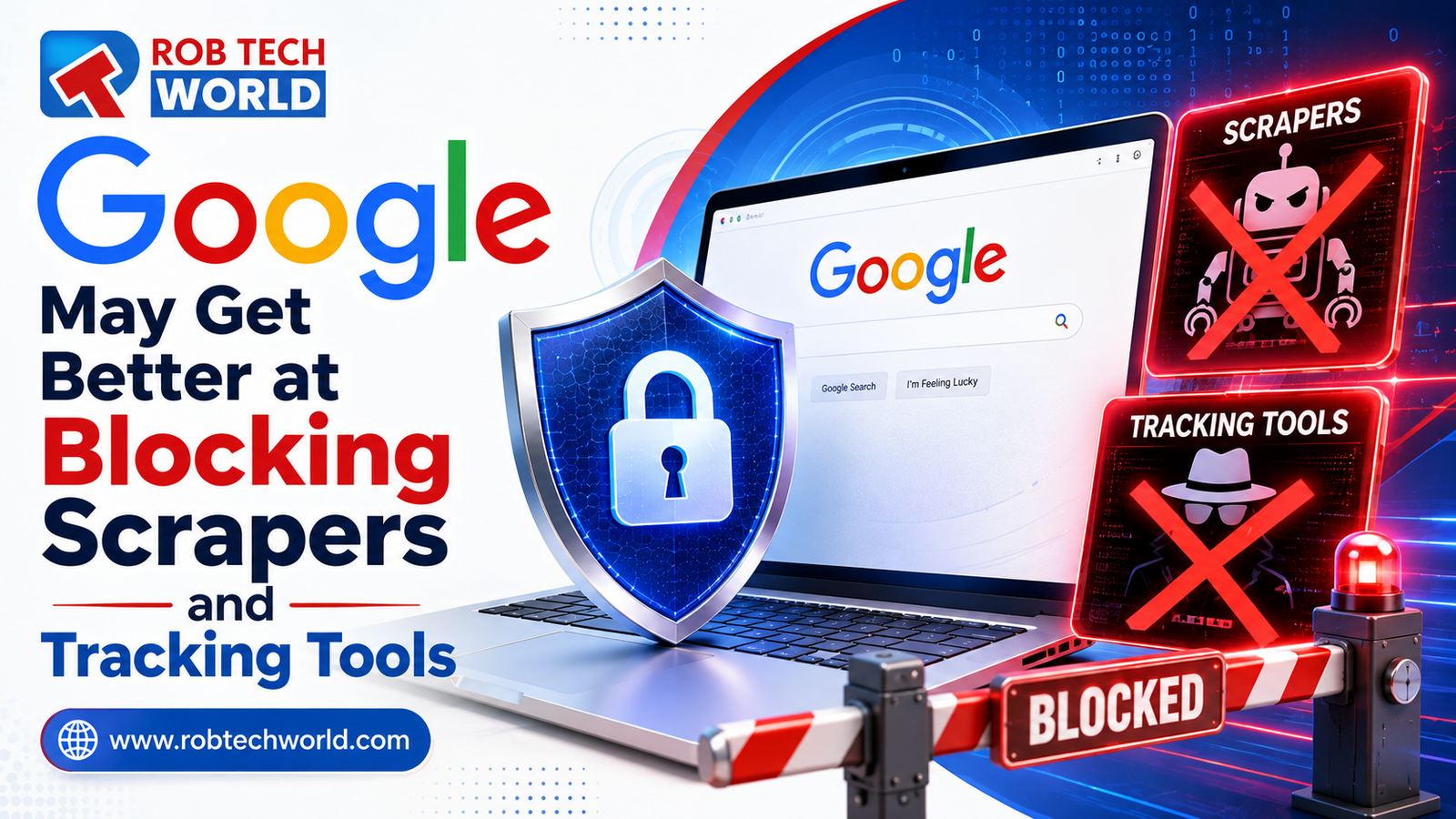




The search ecosystem is becoming more difficult for automated data collection. Blocking Scrapers and Tracking Tools is becoming an increasingly important topic as Google continues to develop technical measures that can limit automated access to search-result data and improve control over online activity.
For businesses, SEO professionals, marketers, and developers, these changes matter because many digital tools rely on search-result information. Rank trackers, keyword research platforms, competitor-monitoring tools, and SERP analysis systems all depend on consistent access to Google Search.
As Google changes how its services handle automated requests, companies that depend heavily on scraped search data may need to adjust their technology and reporting processes.
Why Google Is Focusing More on Automated Access?
Google Search is used by billions of people and is also accessed by a large number of automated systems. These include legitimate crawlers, SEO platforms, research tools, monitoring services, and various types of bots.
However, automated access can operate at a much larger scale than normal human browsing. A system can send a large number of requests in a short period, collect search results automatically, and continuously repeat the process across locations, devices, and keywords.
This creates technical and operational challenges for search platforms.
Google has therefore continued to improve the systems it uses to detect unusual automated activity and manage how its services are accessed.
Not All Automated Bots Serve the Same Purpose
It is important to understand that not every bot is harmful.
Google itself uses automated crawlers to discover and process content across the web. Other legitimate services may also use bots for indexing, monitoring, analytics, research, or accessibility.
The concern is primarily around automated activity that creates excessive load, attempts to bypass restrictions, or collects information at a scale that Google’s systems consider problematic.
How Google Could Make Search Scraping Harder?
One major area of concern for SEO tools is the collection of Google Search results at scale.
Rank-tracking and SEO platforms may need to process large numbers of searches every day. They can monitor keywords across different countries, cities, languages, devices, and search environments.
When Google changes the technical structure of Search results, these systems may need to change their collection methods as well.
A small change in how links, page elements, requests, or responses are handled can affect automated data extraction.
Why Search Result Changes Matter to SEO Tools?
Many SEO platforms depend on structured Search data to determine where a website appears for a keyword.
For example, a rank-tracking system may repeatedly check a query and identify which websites appear on the first page.
If automated access becomes more restricted, the platform may experience:
| Area | Possible Impact |
|---|---|
| Rank tracking | Delayed or incomplete ranking data |
| Competitor research | Less consistent SERP information |
| SEO reporting | Reporting delays or missing results |
| Keyword monitoring | Fewer successful automated checks |
| Data collection | Higher technical and infrastructure costs |
| Local SEO tracking | Possible changes in location-based data collection |
This does not necessarily mean that SEO tools will stop working. Instead, their data collection systems may become more complex and expensive to maintain.
Scrapers and Tracking Tools Are Different
Although scrapers and tracking tools are often discussed together, they do not perform exactly the same function.
A web scraper is generally a software program that automatically collects information from websites or web pages.
A tracking tool, on the other hand, may monitor user interactions, browser activity, sessions, identifiers, conversions, or behavior across a digital environment.
These technologies can have completely different purposes.
How Tracking Technology Is Evolving?
Browser privacy has also become an important area of development.
Modern browsers are introducing technologies intended to provide users with greater privacy and reduce certain forms of cross-site tracking. These changes can affect cookies, identifiers, browser signals, and other mechanisms used by advertising and analytics systems.
For businesses, this means website analytics and digital marketing technologies may continue to change alongside search technology.
The important point is that Google’s efforts around Search scraping and its broader work around privacy should not automatically be considered one single update. They are related to the wider evolution of automated access and data privacy, but they address different technical problems.
What These Changes Mean for Rank Tracking?
SEO professionals are likely to notice changes in this area because rank tracking depends heavily on reliable search-result data.
An enterprise SEO platform may monitor tens of thousands or even millions of keyword combinations. Each query can generate data about rankings, competitors, SERP features, locations, devices, and other search elements.
When automated access becomes more difficult, the quality and speed of that information may be affected.
Third-Party SEO Data Needs More Context
A sudden change in a ranking report does not always indicate that a website has actually gained or lost search visibility.
Sometimes the problem may originate from the data collection process.
For example, a reporting platform could experience:
- Delayed keyword checks
- Temporary gaps in ranking information
- Changes in local search measurements
- Incomplete SERP feature data
- Greater variation between tracking platforms
This is why SEO teams should compare third-party reports with first-party sources such as Google Search Console and website analytics.
Should Website Owners Worry About Google Crawling?
For most website owners, the answer is no.
Businesses that want their pages to appear in Google Search need to make sure important content remains accessible to search-engine crawlers.
Google provides website owners with several ways to manage crawling and indexing. Robots.txt can be used to control crawler access to specific resources, while other methods such as noindex can be used when a page should not appear in search results.
The objective should not be to block legitimate search-engine crawling unnecessarily.
Maintain a Clean Technical SEO Setup
A website should have a clear and reliable technical foundation.
Important areas include:
- Accurate robots.txt configuration
- Updated XML sitemap
- Crawlable internal links
- Proper canonical implementation
- Mobile-friendly design
- Fast server response
- Secure HTTPS implementation
- Accessible and useful page content
These elements make it easier for search engines to discover, process, and understand website content.
Why Website Performance Matters More Than Ever?
Businesses cannot control every change Google makes to its search infrastructure.
They can, however, control the quality of their own websites.
A fast, secure, responsive, and technically sound website provides a stronger foundation for organic search and digital marketing.
This is particularly important as websites are now discovered through traditional search, local search, AI-powered interfaces, social platforms, and other digital channels.
Build a Website That Can Adapt to Change
Modern websites need to be more than visually attractive.
They should also provide:
Performance: Pages should load efficiently across desktop and mobile devices.
Security: Websites should be protected against common vulnerabilities and unauthorized activity.
Scalability: Infrastructure should be able to handle growing traffic and business requirements.
Search visibility: Content and technical elements should support effective crawling and indexing.
Usability: Visitors should be able to navigate the website easily and complete important actions.
A strong technical foundation can help businesses adapt more effectively when search technologies change.
How Businesses Can Prepare for Future Changes?
The best approach is to avoid depending entirely on a single SEO platform or source of search data.
Google Search Console can provide first-party information about search performance, indexing, and search visibility. Analytics systems can provide insights into website traffic and user behavior.
Third-party SEO platforms can still be valuable for competitor research, keyword monitoring, and broader market analysis.
Using multiple sources provides a more complete picture.
Review Your Website Regularly
Businesses should periodically check their websites for technical problems that could affect search visibility or user experience.
Key areas to monitor include:
- Website speed and server performance
- Crawlability and indexing
- Robots.txt and sitemap configuration
- Mobile responsiveness
- Broken links and technical errors
- Internal linking
- Website security
- Organic search performance
Regular technical audits can help identify issues before they become larger problems.
What Google’s Anti-Scraping Direction Could Mean?
Google’s continuing efforts to manage automated access indicate that search-data collection may become more technically demanding over time.
This does not mean that all scraping activity will disappear. Different tools use different technologies, and the effect of Google’s changes can vary depending on how a platform collects and processes search data.
For SEO teams, the key lesson is to treat automated ranking data carefully and understand how that data is generated.
For website owners, the priority remains clear: maintain a fast, secure, accessible, and technically healthy website.
How Rob Tech World Helps Businesses Build Better Websites?
Rob Tech World is a full-service web design and development company in India, helping businesses across India, the USA, Canada, the UK, Australia, and Dubai build fast, secure, scalable, and user-friendly websites.
With 7+ years of industry experience, a team of 20+ professionals, and 400+ completed projects, the company works across website design, WordPress development, custom website development, PHP and Laravel solutions, e-commerce development, WooCommerce, Shopify, and responsive business websites.
The focus is on creating websites that combine usability, performance, security, mobile responsiveness, and search visibility.
As search engines and digital technologies continue to evolve, having a technically strong website can help businesses build a more reliable online presence.
FAQs About Blocking Scrapers and Tracking Tools
1. Is Google completely blocking search scrapers?
No. Changes to Google’s systems can make automated Search data collection more difficult for some platforms, but this does not mean that every scraper or automated service has been completely blocked.
2. Will Google’s anti-scraping changes affect rankings?
Not necessarily. A change in a third-party ranking report does not automatically indicate a change in Google’s ranking algorithm. Reporting issues can sometimes result from problems or changes in data collection.
3. Are web scrapers and tracking tools the same?
No. Scrapers generally collect information automatically, while tracking tools are designed to monitor activity, interactions, identifiers, or user behavior. They serve different technical purposes.
4. Should I block Googlebot from my website?
Generally, businesses should not block Googlebot when they want their website pages to be discovered and indexed in Google Search. Website owners should instead use appropriate crawling and indexing controls based on their specific requirements.
5. How can businesses prepare for changes in Google Search?
Businesses should maintain technically healthy websites, monitor Google Search Console, keep their XML sitemap and robots.txt accurate, improve website performance, and use multiple reliable sources when analyzing SEO performance.
Build a Stronger Website for the Changing Digital Landscape
Search technology will continue to evolve, and businesses need websites that can adapt with it.
A fast, secure, scalable, mobile-friendly, and SEO-ready website gives your business a stronger foundation for long-term online growth.
Rob Tech World can help you build, redesign, or upgrade your website with solutions tailored to your business goals. Contact Rob Tech World today to discuss your web development, e-commerce, WordPress, Shopify, or custom website requirements.